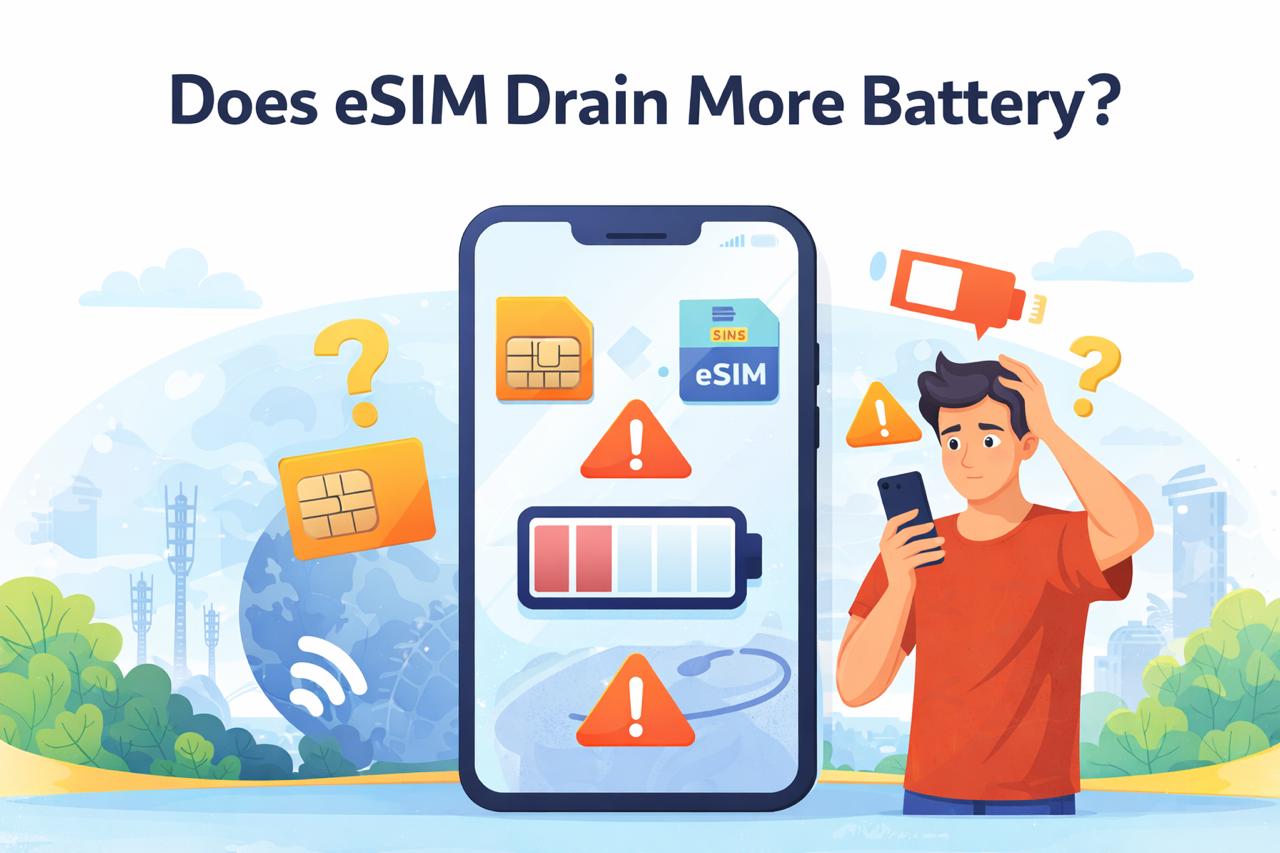
As eSIM technology becomes more common in modern smartphones, many users wonder whether it affects battery life. Since eSIM operates differently from traditional SIM cards, it’s natural to question whether it might consume more power.
Some people believe that because eSIM is digital and relies on software provisioning, it could drain the battery faster. Others worry that using eSIM alongside a physical SIM might increase power consumption.
In reality, the relationship between eSIM and battery life is often misunderstood. In most situations, eSIM has little to no direct impact on battery performance. Battery usage is primarily influenced by how the phone’s cellular radios operate rather than by the SIM technology itself.
To understand the real impact, it helps to look at how SIM cards interact with mobile networks and how dual SIM setups affect power consumption.
How SIM Impacts Radio Usage
The SIM card—whether physical or embedded—does not actively transmit data. Instead, it serves as an authentication module that allows your device to connect to a mobile network.
The components that consume the most power are the cellular radios inside the smartphone, which handle:
Network searching
Signal transmission
Data communication with towers
From the phone’s perspective, there is almost no operational difference between a physical SIM and an eSIM. Both simply provide subscriber credentials to the modem.
Once the connection is established, the radio system handles communication exactly the same way. This means battery consumption depends far more on signal strength, data usage, and network type (4G, 5G, etc.) than on the SIM format.
In short, switching from a physical SIM to eSIM alone will not noticeably affect battery life.
Dual SIM Battery Impact
Battery usage can increase slightly when a phone runs two active SIM profiles at the same time, regardless of whether they are physical SIMs or eSIMs.
Dual SIM smartphones must maintain connections with two networks simultaneously. This means the cellular modem periodically checks both networks for calls, messages, and data.
As a result, the device may:
Perform more frequent network scans
Maintain standby communication with two carriers
Manage multiple signal connections
However, the additional battery consumption is usually very small in modern smartphones. Many devices include optimized dual-SIM standby modes that reduce unnecessary radio activity.
The important point is that the battery impact comes from dual connectivity, not from eSIM technology itself.
Real-World Usage Comparison
In real-world tests and everyday use, the difference between eSIM and physical SIM battery usage is minimal.
Most smartphone manufacturers design eSIM systems to operate directly within the device’s secure hardware, meaning there are no additional background processes required.
Users typically notice battery differences due to other factors, such as:
Poor signal coverage
Continuous data usage
Location services and background apps
Frequent switching between networks
For example, when traveling internationally, battery drain may increase because the phone constantly searches for available networks. This would happen with both physical SIM and eSIM connections.
Overall, there is no clear evidence that eSIM drains more battery than traditional SIM cards.
Battery Optimization Tips
Even though eSIM itself does not significantly impact battery life, there are several ways to extend your phone’s battery when using mobile data.
Disable unused SIM profiles
If you are not using a secondary SIM or eSIM profile, disabling it can reduce unnecessary network checks.
Turn off unused network features
Disable options such as:
5G when not needed
roaming searches
automatic network switching
Use Wi-Fi when available
Wi-Fi connections typically consume less power than mobile data, especially in areas with weak cellular signals.
Monitor background apps
Apps that constantly sync data or track location can drain battery faster than network connectivity itself.
Keep your device updated
Software updates often include modem and battery efficiency improvements, especially for newer technologies like eSIM.
Conclusion
So, does eSIM drain more battery? In most cases, no.
The SIM technology itself—whether physical or embedded—has very little influence on battery consumption. The biggest factors affecting battery life are signal strength, network activity, and how many networks your phone connects to.
While dual SIM setups may slightly increase power usage, this happens regardless of whether the SIMs are physical or digital.
For most users, switching to eSIM will not noticeably affect battery performance, while still offering benefits such as easier carrier switching, improved security, and greater convenience when traveling.