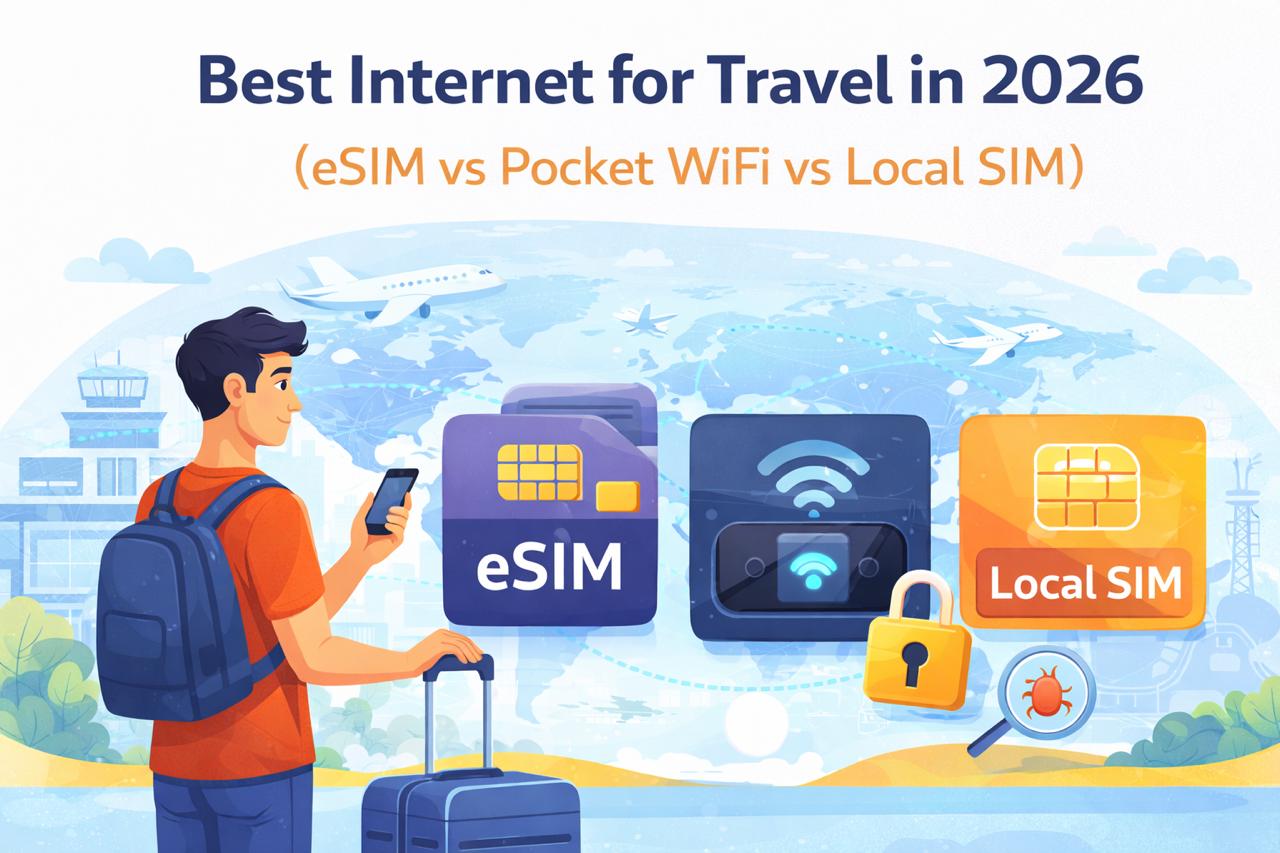
Reliable internet access has become one of the most important travel essentials. Whether you’re navigating unfamiliar streets, booking transportation, working remotely, or simply staying connected with family, having stable mobile data while traveling is no longer optional.
In 2026, travelers typically choose between three main internet options: eSIM, pocket WiFi, and local SIM cards. Each option offers different advantages in terms of cost, convenience, setup, and performance.
Understanding the differences between these solutions can help you avoid expensive roaming fees and choose the best connectivity option for your trip.
In this guide, we compare eSIM vs pocket WiFi vs local SIM cards so you can decide which travel internet solution works best for your needs.
Main Internet Options for Travelers
Before comparing prices and convenience, it helps to understand what each option actually is.
eSIM
An eSIM (embedded SIM) is a digital SIM built into modern smartphones. Instead of inserting a physical SIM card, you download a mobile data plan by scanning a QR code or installing a provider’s app.
Key benefits of eSIM:
Instant activation
No physical SIM card required
Multiple plans can be stored on one device
Easy switching between networks
Many international eSIM providers now offer global travel data plans that work across dozens of countries.
Pocket WiFi
A pocket WiFi device is a portable hotspot that connects to local cellular networks and creates a personal WiFi network for your devices.
Travelers rent or purchase these devices and connect phones, tablets, or laptops to them.
Key features:
Connect multiple devices at once
Works like a mobile router
Often rented at airports or shipped before travel
However, travelers must remember to charge and carry the device throughout the trip.
Local SIM Card
A local SIM card is a physical SIM purchased from a telecom operator in the destination country. After inserting the SIM into your phone, you can access local data plans at domestic prices.
Advantages include:
Often the cheapest option
High network performance
Local phone number in some cases
The downside is that travelers must find a store, show ID, and replace their existing SIM card.
Cost Comparison for a 2-Week Trip
To understand the real cost differences, let’s compare a typical two-week trip across three countries.
Example destinations:
France
Japan
United States
Estimated data usage: 10–15 GB
OptionEstimated CostNoteseSIM$25 – $60Regional or global planPocket WiFi$70 – $120Rental + insuranceLocal SIM$20 – $50Separate SIM needed per country
Key takeaway:
Local SIM cards are usually cheapest
eSIM offers the best balance of cost and convenience
Pocket WiFi is the most expensive option
However, cost alone should not determine the best option.
Convenience & Setup Differences
Travel convenience often matters more than price.
Here’s how the three options compare in real-world travel situations.
eSIM Setup
eSIM is typically the fastest and easiest setup.
Activation usually takes only a few minutes:
Purchase a plan online
Scan a QR code
Activate mobile data
Travelers can even install the eSIM before boarding their flight, allowing internet access immediately after landing.
Pocket WiFi Setup
Pocket WiFi requires a bit more preparation.
Typical process:
Reserve the device online
Pick it up at the airport or have it shipped
Charge the device daily
Return it after the trip
It works well for groups traveling together, since multiple devices can connect to the same hotspot.
Local SIM Setup
Buying a local SIM card usually involves the most steps:
Find a telecom shop or kiosk
Provide identification
Insert and configure the SIM
Possibly adjust APN settings
While setup may take longer, the advantage is local pricing and strong network performance.
Best Option by Traveler Type
The best travel internet option often depends on the type of traveler.
Short Tourist
If you’re traveling for a few days or a short vacation:
Best option: eSIM
Why:
Quick setup
No need to visit stores
Works immediately after landing
Convenience matters more than saving a few dollars.
Digital Nomad
Digital nomads often stay longer and rely heavily on stable internet.
Best option: Local SIM
Reasons:
Cheapest long-term option
Access to large local data plans
Stronger network performance
For remote workers, network reliability is critical.
Business Traveler
Business travelers usually prioritize reliability and flexibility.
Best option: eSIM or Pocket WiFi
Why:
Immediate connectivity
Easy network switching
Backup connectivity options
Pocket WiFi can also support multiple devices like laptops and tablets simultaneously.
Final Verdict
Choosing the best internet for travel in 2026 depends on your priorities.
If you value simplicity and speed, eSIM is often the best option. It eliminates the need for physical SIM cards and provides instant connectivity.
If you want the lowest possible cost, a local SIM card usually offers the most affordable data plans.
If you need internet for multiple devices, pocket WiFi may still be useful despite the higher price.
For most travelers today, however, eSIM has become the most convenient and balanced solution, combining reasonable pricing with effortless setup.
As international connectivity continues to improve, the days of expensive roaming bills are slowly becoming a thing of the past.