eSIM technology has quickly become one of the most convenient ways to stay connected, especially for travelers and people who switch networks frequently. Instead of inserting a physical SIM card, users can activate a mobile plan digitally within seconds.
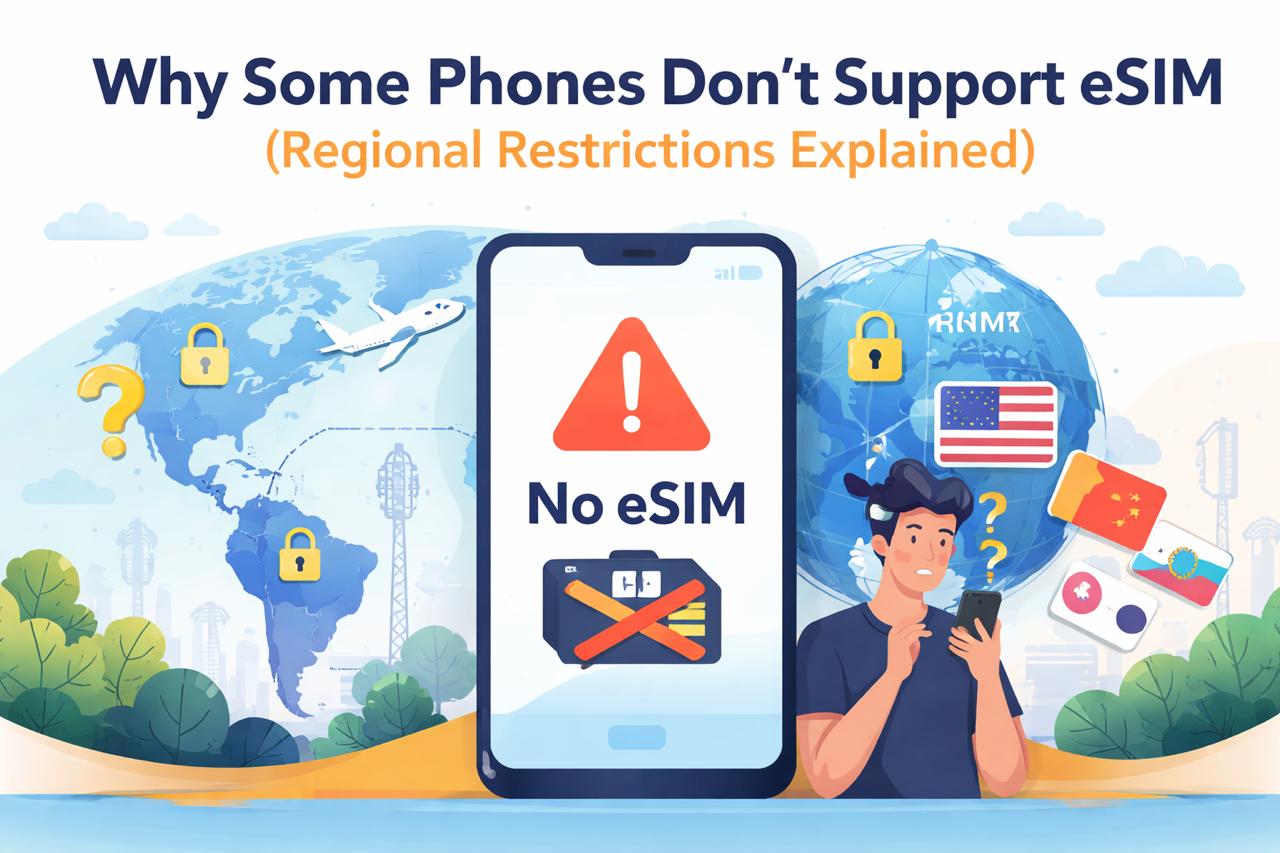
However, many smartphone users discover something confusing: their phone supports eSIM in one country but not in another, or a model that supports eSIM globally may not work with certain carriers.
This inconsistency often raises questions. If the phone has the technology, why doesn’t it always work everywhere?
The answer usually lies in a combination of hardware design, software configuration, carrier policies, and regional regulations. Understanding these factors can help you determine whether your device supports eSIM and why restrictions sometimes exist.
Hardware vs Software Limitations
The first factor that affects eSIM support is the device hardware itself.
Not every smartphone includes an eSIM chip. While most modern flagship phones now support eSIM, many budget and mid-range models still rely entirely on physical SIM cards.
Even when the hardware supports eSIM, software configuration also plays an important role. Manufacturers often release different firmware versions depending on the region.
For example, two phones with identical hardware may behave differently because:
One firmware version enables eSIM functionality
Another version disables or hides the feature
This means the same device model can have different capabilities depending on the software installed by the manufacturer or carrier.
Carrier Lock & Regional Firmware
Another common reason eSIM may not work is carrier locking.
Some phones are sold through mobile operators with restrictions that limit which networks can be used. These devices may be configured to prioritize the operator’s own services and may restrict certain features.
Carrier restrictions can include:
Network locking to a specific operator
Disabled eSIM activation
Limited compatibility with certain profiles
In addition, smartphone manufacturers often distribute region-specific firmware versions. These versions are optimized for local telecom networks and regulatory requirements.
As a result, a phone purchased in one region may not support eSIM features in another region until firmware updates are released.
Regulatory & Market Restrictions
Government regulations and market strategies can also influence eSIM availability.
In some countries, telecom regulators impose specific rules on mobile identity verification, SIM registration, and network provisioning. These policies can affect how eSIM technology is implemented.
For example, some regions require strict SIM registration procedures that are easier to manage with physical SIM cards.
Manufacturers and telecom providers may therefore limit eSIM support in markets where:
SIM registration laws are strict
Mobile carriers have not fully adopted eSIM systems
Network infrastructure is not yet optimized for digital SIM provisioning
Market strategy can also play a role. In certain countries, operators may prefer traditional SIM cards because they offer more control over distribution and activation.
How to Check Device Compatibility
If you are unsure whether your smartphone supports eSIM, there are several easy ways to check.
Check the manufacturer’s specifications
Visit the official website of the phone manufacturer and review the device’s connectivity features.
Look in your phone settings
Many phones include an eSIM menu in the mobile network settings. For example:
Settings → Cellular / Mobile Network → Add eSIM or Add Mobile Plan
Verify with your carrier
Not all carriers support eSIM, even if your device does. Contact your mobile operator or check their website for supported devices.
Check the model number
Different regions often have different model numbers for the same phone. Looking up the exact model number can help confirm whether your device supports eSIM in your region.
Conclusion
eSIM technology continues to expand rapidly, but regional restrictions and device variations still affect compatibility.
A phone may fail to support eSIM in certain locations due to:
Hardware differences
Firmware limitations
Carrier restrictions
Local telecom regulations
Before purchasing an eSIM plan or traveling internationally, it is always a good idea to verify both your device compatibility and carrier support.
As telecom networks modernize and eSIM adoption grows worldwide, these limitations are gradually disappearing, making global connectivity simpler for travelers and smartphone users alike.